
Driveway and parking lot sealing
Sealcoating in Kansas City, MO
Clean, fill the cracks, then seal, on a dry day warm enough for the coating to cure.
- Free on-site estimates with measurements
- Itemized written quote: base, thickness, edges
- Drainage and slope checked before any asphalt is laid
What Sealcoating Does and What It Does Not
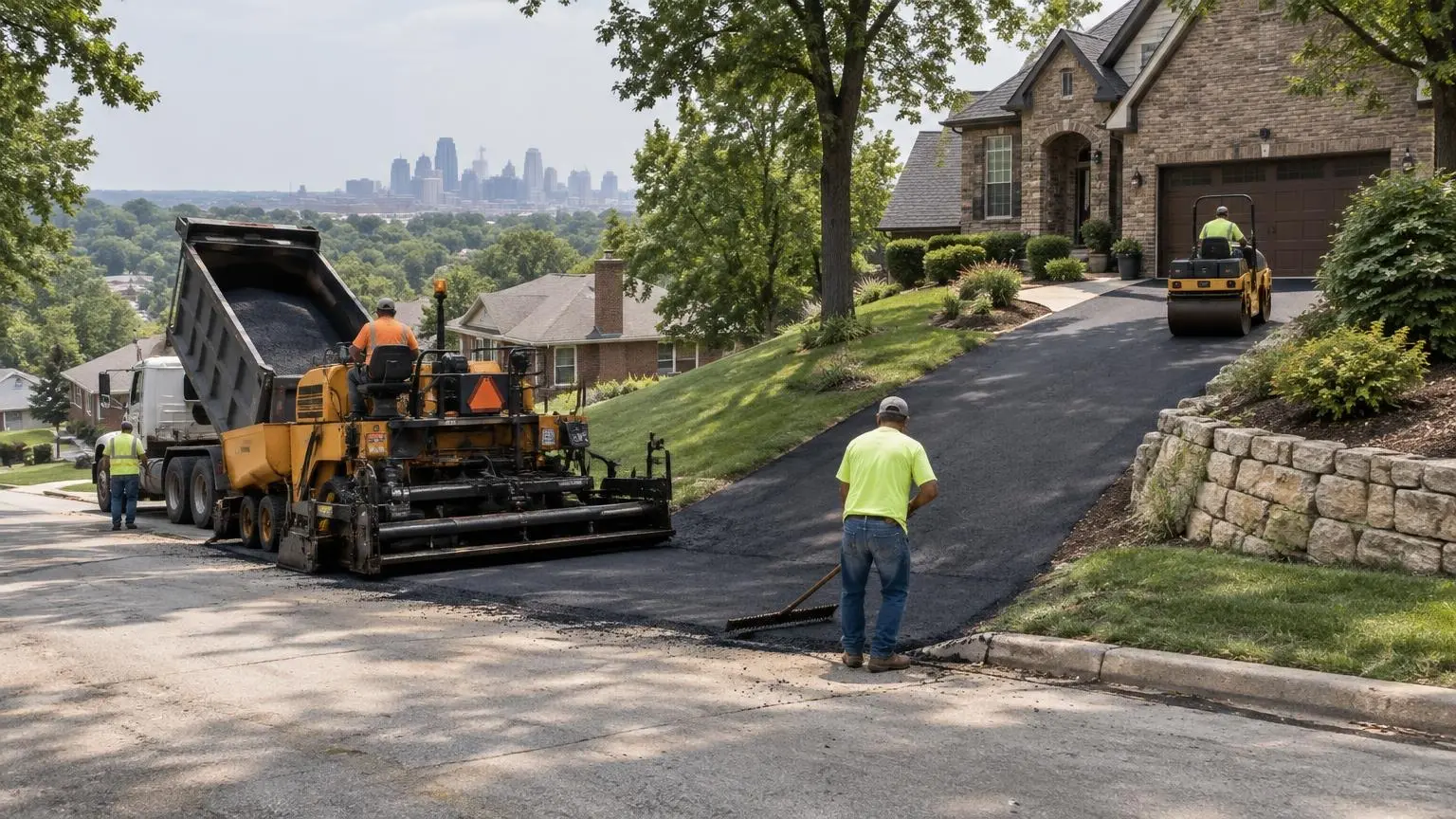
Sealcoating puts a thin protective layer over asphalt that has already cured. It slows the drying and graying that sun causes, helps keep water and oil from soaking into the surface, and restores a uniform dark finish. It does not fix broken pavement, fill potholes or add strength. Cracks are filled first and failed areas are patched first; sealer goes on last.
When to seal
New asphalt should not be sealed right away. HomeGuide's advice is to give fresh asphalt three to six months to cure first. After that, guides give reseal intervals from roughly every 2 years to every 10, depending on the sealer, the climate and traffic. A home driveway in Kansas City often lands somewhere in the middle; a busy commercial lot needs it more often. If water no longer darkens the surface and the aggregate is starting to show, it is time.
Weather matters here
HomeGuide lists 50 to 95 degrees and dry conditions as the application window, and fast-dry products need it warmer and less humid. Kansas City has a long humid summer and a freeze window that averages late October to early April, so sealcoating is a late spring to early fall job. We check the forecast for rain in the hours after application, because a shower on fresh sealer washes it off.
Sealer types
The two common sealer families are refined coal tar and asphalt emulsion. HomeGuide notes that coal tar resists gasoline and oil well but that many areas have banned it over health and groundwater concerns, while asphalt emulsion is considered more environmentally friendly but stains more easily from oil and fuel. Your quote names the product we plan to use, and we can talk through the tradeoffs.
Preparing the surface
Sealer only sticks to clean pavement. We edge grass back from the borders, blow off dirt and debris, scrub or treat oil spots, and fill cracks before coating. Then the sealer is applied in even coats, with edges done by hand so it does not end up on your concrete, siding or landscaping. Plan on keeping vehicles off for a day or more; HomeGuide gives 12 to 72 hours before driving.
Commercial lots
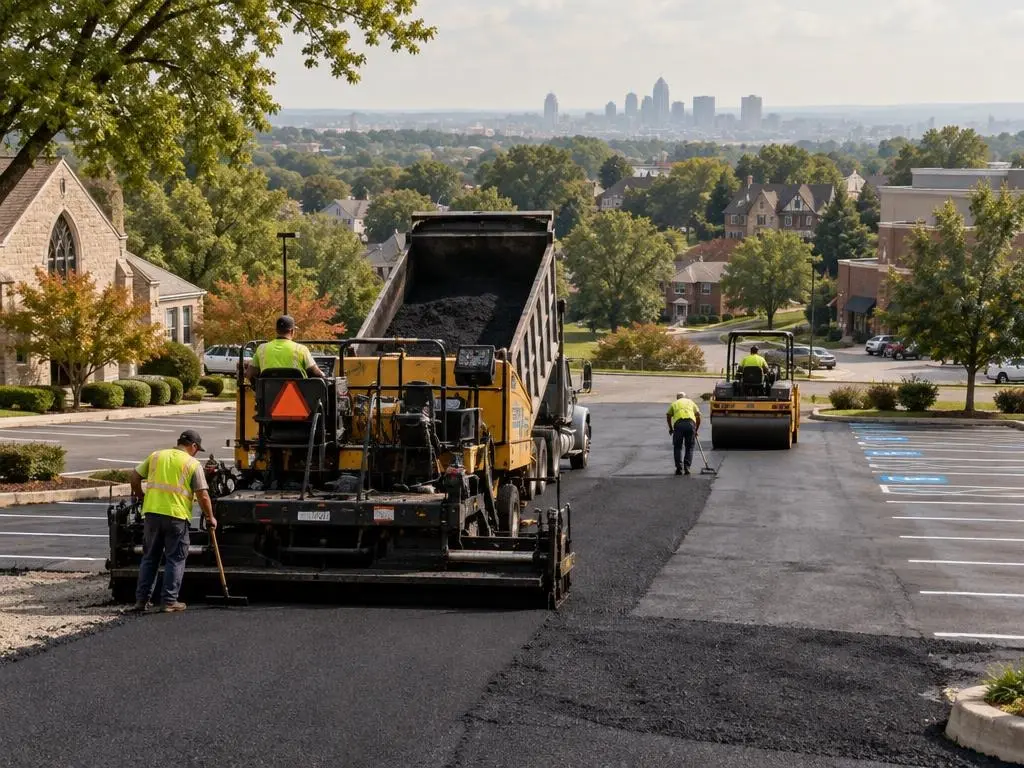
Lots are usually coated in halves or zones to keep customers parking, with crack work done beforehand and restriping afterward, because the coating hides the old lines. Drive lanes and entrances wear through first, so some owners have those areas coated twice. We plan the order and the closures with you before the work is scheduled.
What This Covers
A sealcoating visit includes the prep that makes the coat last.
Cleaning and edging
Grass trimmed back from the edges and debris blown off.
Oil spot treatment
Stains cleaned or primed so sealer can bond.
Crack filling before sealing
Open cracks filled so the coat bridges a closed surface.
Sealer application
Even coats applied by squeegee or spray, with hand-cut edges.
Typical Sealcoating Costs
| Item | Published range |
|---|---|
| Driveway sealing, per sq ft | $1 to $2 with labor (HomeGuide) |
| 2-car driveway, about 400 sq ft | $400 to $800 |
| About 864 sq ft | $860 to $1,700 |
| Typical driveway job | $110 to $1,500; Angi's 2026 average is $470 |
| Parking lot sealcoating, per sq ft | $0.15 to $0.30 (HomeAdvisor) |
National ranges from HomeGuide, Angi (2026) and HomeAdvisor. Kansas City prices can differ, and crack filling, oil treatment and access change the total. Your written estimate is the price.
How It Works
1. Look at the surface
We check age, cracks, oil spots and any areas that need patching first.
2. Prep
Edges trimmed, surface cleaned, oil treated and cracks filled.
3. Seal
Coating applied on a dry day in the right temperature range.
4. Cure
The area is blocked off until the sealer is ready for traffic.
Sealcoating Questions
How many years between sealcoats?
Published guides range from every 2 to 3 years to every 10, depending on product, climate and traffic. Many home driveways do well on a few-year cycle; resealing too often can build up a layer that cracks and peels.
When can new asphalt be sealed?
HomeGuide puts the wait at three to six months. Fresh asphalt is still releasing light oils, and a coat on top too soon holds them in.
How long does sealcoat take to dry?
Usually 1 to 3 hours before walking on it and 12 to 72 hours before driving, according to HomeGuide. Shade and muggy weather slow it down; we let you know when to open it back up.
Does sealcoating fill cracks?
No. Sealer is a thin coat and will not hold in an open crack. Cracks get their own material beforehand, and the coat goes over them.
Sealcoating Service Areas
- Asphalt Paving in Kansas City, MO
- Asphalt Paving in Independence, MO
- Asphalt Paving in Lee's Summit, MO
- Asphalt Paving in Blue Springs, MO
- Asphalt Paving in Raytown, MO
- Asphalt Paving in Grandview, MO
- Asphalt Paving in Liberty, MO
- Asphalt Paving in Gladstone, MO
- Asphalt Paving in North Kansas City, MO
- Asphalt Paving in Parkville, MO
- Asphalt Paving in Riverside, MO
- Asphalt Paving in Belton, MO
- Asphalt Paving in Raymore, MO
- Asphalt Paving in Grain Valley, MO
- Asphalt Paving in Kearney, MO
- Asphalt Paving in Smithville, MO
- Asphalt Paving in Overland Park, KS
- Asphalt Paving in Kansas City, KS
Get a Sealcoating Estimate
Free sealcoating estimates for homes and businesses.