
New driveways and full replacements
Asphalt Driveway Paving in Kansas City, MO
We start below the surface, because that is where most driveways fail.
- Free on-site estimates with measurements
- Itemized written quote: base, thickness, edges
- Drainage and slope checked before any asphalt is laid
Building a Driveway That Survives Kansas City Winters
Asphalt driveway paving covers a brand-new drive, a full replacement of a worn-out one, or a conversion from gravel or broken concrete. If your driveway has spreading alligator cracks, potholes that return every spring, sunken tire paths or edges crumbling into the lawn, the base below has usually given out, and new asphalt on top will not last. A replacement fixes the layers you cannot see.
Layers of a residential driveway
Per HomeGuide, most home driveways use a 2 to 3 inch asphalt layer on a 6 to 8 inch compacted stone base; where a pickup with a trailer or an RV parks, it suggests 3 to 4 inches on 8 to 10 inches of stone. On clay-heavy ground, the base does most of the work: it spreads the load and keeps water from sitting directly under the asphalt. If the soil pumps or flexes when we test it, that area is dug out and rebuilt before base stone goes in.
Steep drives and older lots
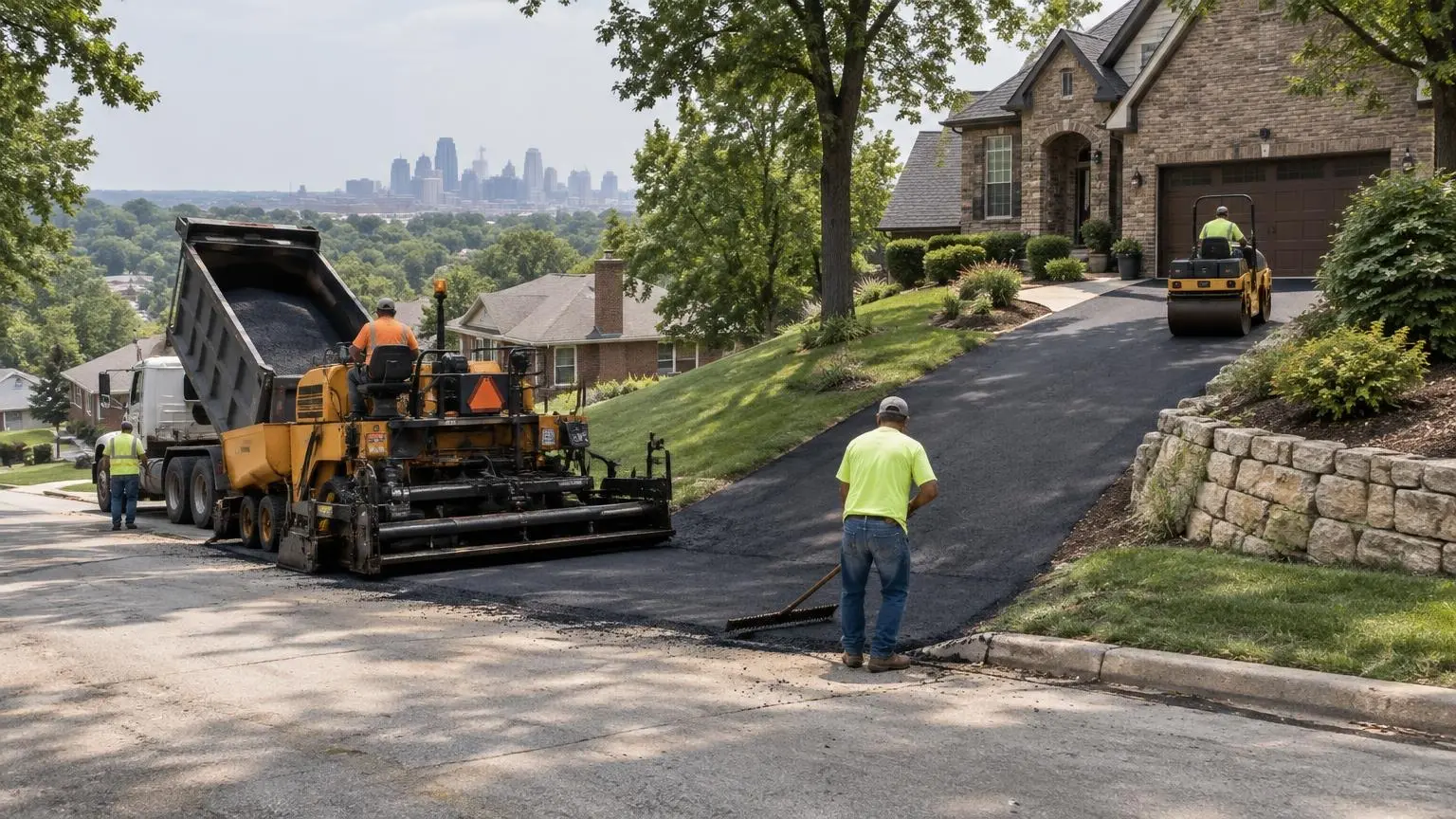
Plenty of Kansas City homes sit above or below the street on hilly lots, especially in older neighborhoods. A steep drive needs a smooth transition at the top and bottom so cars do not scrape, a surface that drains without water racing down the edges, and a clean tie-in at the garage slab so runoff does not sit against the door. HomeGuide notes that curves, slopes and unusual shapes can add 15 to 30 percent to the price because grading and hand work take longer.
The drive approach
In Kansas City, Missouri, the strip from the curb to your property line is called the drive approach. The city's code questions page says that piece needs a permit and inspection, while the driveway behind it does not, though it must meet zoning rules. If yours is cracked or the wrong width, we tell you whether replacing it is part of the job and what that involves before you approve anything.
Replace or resurface?
A driveway with surface wear and a solid base can often take a new 1.5 to 2 inch layer over the top. HomeGuide's guidance points to replacement when cracks cover most of the surface, run deep, or the driveway is past roughly 20 to 30 years and drains poorly. We look at both options and quote the one that fits what we find.
After the paving crew leaves
New pavement is still pliable for days, more so in July heat. Give it a few days before driving on it, and for several weeks after that, do not crank the wheel while stopped or set kickstands, trailer jacks or ramps on it. Sealcoating comes later, after the surface has had several months to cure.
What This Covers
The job runs from tear-out through the last pass of the roller.
Tear-out and haul-away
The existing surface broken up, loaded and hauled off.
Subgrade repair and grading
Soft clay dug out and the ground shaped so water runs off.
Compacted aggregate base
Crushed stone placed in lifts and compacted to carry the load.
Hot-mix asphalt surface
Asphalt laid at the thickness in your quote and rolled while hot.
Gravel-to-asphalt conversions
Existing gravel drives regraded, rebased as needed and paved.
Typical Asphalt Driveway Costs
| Item | Published range |
|---|---|
| New asphalt driveway, per sq ft | $5 to $12 (HomeGuide); $7 to $15 (Angi 2026) |
| 400 sq ft driveway | $2,000 to $4,800 |
| 600 sq ft driveway | $3,000 to $7,200 |
| 1,000 sq ft driveway | $5,000 to $12,000 |
| Remove and replace, per sq ft | $8 to $15 |
| Resurfacing over sound base, per sq ft | $3 to $7 |
| Driveway permit (typical) | $50 to $200 |
National ranges from HomeGuide and Angi (2026). Neither lists Kansas City figures, and local prices can differ. Slope, tear-out, base depth and access change the total. Your written estimate is the price.
How It Works
1. Measure and probe
We measure, check slope at both ends and test the existing surface for soft areas.
2. Written quote
Each part of the job gets its own line and price.
3. Remove and rebuild the base
Old material comes out, soft subgrade is replaced and the base is compacted.
4. Pave and roll
Hot mix is placed, shaped at the garage and approach, and rolled before it cools.
Asphalt Driveway Paving Questions
What thickness does a home asphalt driveway need?
HomeGuide suggests 2 to 3 inches of asphalt on a 6 to 8 inch stone base for typical homes, stepping up to 3 to 4 inches on 8 to 10 inches where heavy vehicles park. On soft clay we may recommend more base, and the quote states the depths.
Should I choose asphalt or concrete in Kansas City?
Both work here. Asphalt usually costs less up front, flexes a little with the ground and can be patched and sealed, but it needs periodic maintenance. Concrete runs higher in price and often outlives asphalt, though ground movement shows up as obvious cracks. Many homes pair a concrete approach with an asphalt driveway.
How long before I can drive on a new asphalt driveway?
Plan on roughly three days, more during a heat wave. For the next few weeks, vary where you park, steer gently and keep heavy point loads off while it hardens.
Can a driveway be paved in late fall?
Sometimes, if ground and air temperatures allow the mix to stay hot long enough to compact. Kansas City's freeze window averages late October to early April, so late-season jobs are planned around the forecast. HomeGuide notes winter scheduling can bring 10 to 15 percent savings, but conditions come first.
Asphalt Driveway Paving Service Areas
- Asphalt Paving in Kansas City, MO
- Asphalt Paving in Independence, MO
- Asphalt Paving in Lee's Summit, MO
- Asphalt Paving in Blue Springs, MO
- Asphalt Paving in Raytown, MO
- Asphalt Paving in Grandview, MO
- Asphalt Paving in Liberty, MO
- Asphalt Paving in Gladstone, MO
- Asphalt Paving in North Kansas City, MO
- Asphalt Paving in Parkville, MO
- Asphalt Paving in Riverside, MO
- Asphalt Paving in Belton, MO
- Asphalt Paving in Raymore, MO
- Asphalt Paving in Grain Valley, MO
- Asphalt Paving in Kearney, MO
- Asphalt Paving in Smithville, MO
- Asphalt Paving in Overland Park, KS
- Asphalt Paving in Kansas City, KS
Get a Asphalt Driveway Paving Estimate
Free on-site estimates for new and replacement driveways.