
Parking lot layout and restriping
Line Striping in Kansas City, MO
Clear stalls, correct accessible spaces and traffic markings, laid out before the paint goes down.
- Free on-site estimates with measurements
- Itemized written quote: base, thickness, edges
- Drainage and slope checked before any asphalt is laid
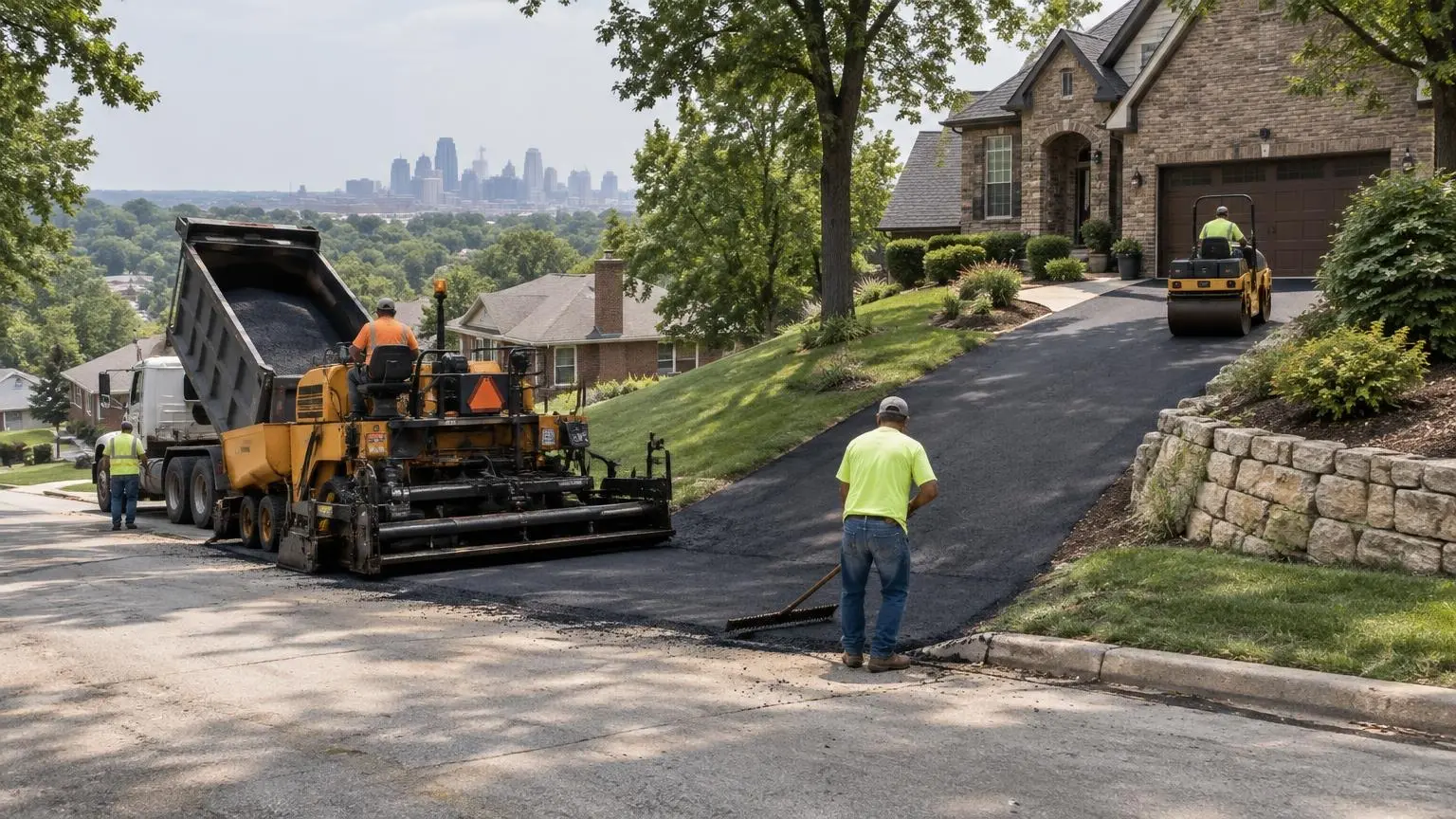
Restriping That Gets the Count and the Layout Right
Line striping marks a parking lot so drivers know where to park, where to drive and where not to stop. Faded lines lead to crooked parking, lost spaces and confused traffic. Restriping refreshes the layout you have; a new layout redraws the lot after paving or when the use of the property changes.
Accessible parking when you restripe
Under the U.S. Department of Justice's ADA guidance, repainting a lot's lines brings the 2010 ADA Standards into play for accessible parking. That makes a restripe a good time to confirm the count and the dimensions:
- 1 to 25 total spaces: 1 accessible space; 26 to 50: 2; 51 to 75: 3; 76 to 100: 4; 101 to 150: 5; 151 to 200: 6
- For every six accessible stalls (or part of six), one is van accessible, and never fewer than one
- Standard accessible stalls: 96 inches minimum, plus a 60-inch aisle beside them
- Van stalls: 132 inches plus a 60-inch aisle, or a 96-inch stall beside a 96-inch aisle
- Signs hung so their lower edge is at least 60 inches up; stall and aisle slopes capped at 1:48
Paint can mark the space, but slope is set by the pavement, so on a sloped Kansas City lot we check grades where the accessible spaces go and tell you if the pavement itself is the issue.
Other markings
Beyond stalls, a lot may need directional arrows, stop bars, crosswalks, fire lane markings, loading zones, curb painting and stenciled words or numbers. Fire lane requirements come from the local fire code official, so we follow what your city or fire district requires.
Timing and paint
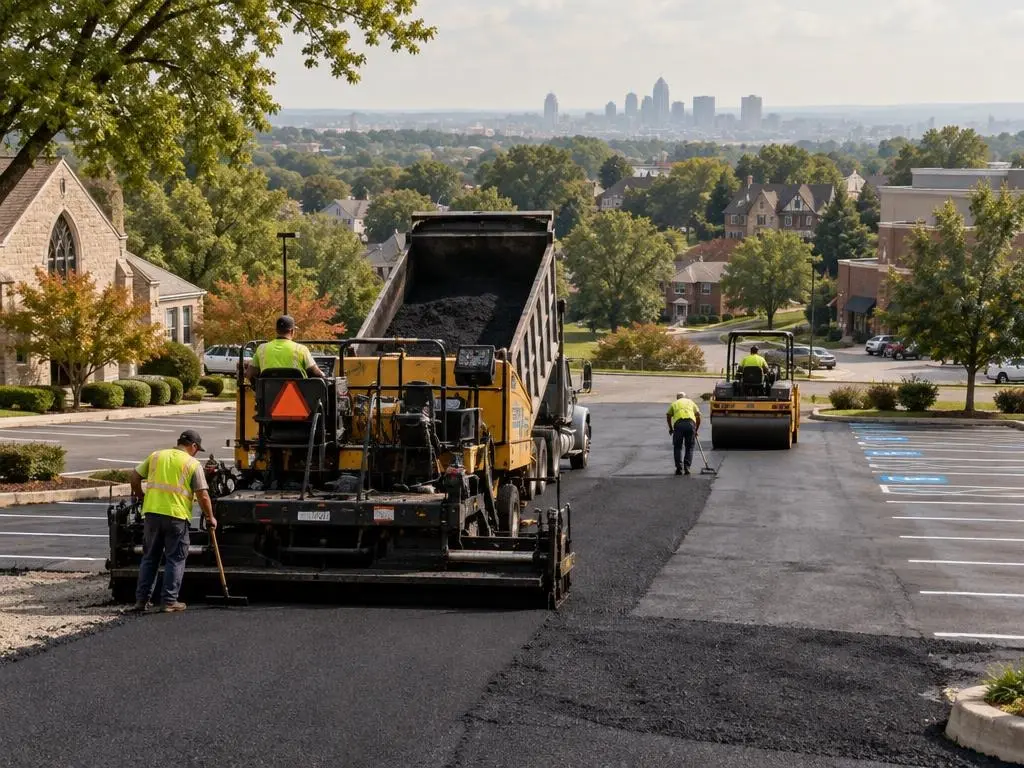
Striping on new asphalt waits until the surface is ready, and striping after sealcoating waits until the sealer has cured. HomeGuide expects lines to hold up for two to five years, with heavy traffic at the short end. We schedule early mornings, evenings or weekends for busy lots so the work does not block customers, and we block off fresh lines until they dry.
Layout changes
If you want more spaces, wider stalls, a new traffic pattern or EV and pickup areas, a new layout is planned on paper before we paint. HomeGuide notes a new layout typically costs 20 to 50 percent more than following existing lines because of the measuring and blackout work.
What This Covers
Striping covers the markings a lot needs to work safely.
Restriping existing lines
Faded stalls and markings repainted on the current layout.
New layouts
Lots measured and laid out after paving or a change in use.
Accessible spaces
Accessible and van-accessible spaces, aisles and symbols marked to the 2010 Standards.
Arrows, crosswalks and stop bars
Traffic markings that guide cars and pedestrians.
Fire lanes and curb painting
Fire lane markings and painted curbs as your local fire official requires.
Typical Line Striping Costs
| Item | Published range |
|---|---|
| Per standard stall | $4 to $5 |
| Accessible stall | $25 to $40 |
| Directional arrow or stop bar | $10 to $30 |
| Crosswalk, fire lane or loading zone | $35 to $75 |
| Curb painting, per linear ft | $0.75 to $1.00 |
| 30 to 50 stall lot | $500 to $1,200 |
| Mobilization fee | $150 to $350 |
National ranges from HomeGuide. New layouts typically cost 20 to 50 percent more than restriping existing lines. Kansas City prices can differ; your written estimate is the price.
How It Works
1. Count and measure
We count stalls, check accessible spaces against the required number and note faded markings.
2. Layout plan
You approve the layout, including any changes, before paint goes down.
3. Clean and paint
The surface is blown clean and lines are painted with a striping machine and stencils.
4. Dry and reopen
Fresh lines are blocked off until dry, then the lot reopens.
Line Striping Questions
What do striping contractors charge?
HomeGuide lists about $4 to $5 per standard stall, $25 to $40 per accessible stall, and $500 to $1,200 for a 30 to 50 stall lot, plus a mobilization fee of $150 to $350. New layouts cost more than restriping.
Does restriping require ADA compliance?
Yes. Per the Department of Justice, repainting a lot's lines brings in the 2010 ADA Standards: the right count of accessible stalls, van-accessible spaces and access aisles.
How many accessible spaces does my lot need?
Under the 2010 Standards table, 1 to 25 spaces need 1 accessible space, 26 to 50 need 2, 51 to 75 need 3 and 76 to 100 need 4, with at least one van-accessible space. Count each parking facility separately.
How often should a lot be restriped?
HomeGuide says striping usually lasts 2 to 5 years. Busy lots, snowplow wear and sealcoating schedules often set the timing; restriping right after sealcoating is common.
Line Striping Service Areas
- Asphalt Paving in Kansas City, MO
- Asphalt Paving in Independence, MO
- Asphalt Paving in Lee's Summit, MO
- Asphalt Paving in Blue Springs, MO
- Asphalt Paving in Raytown, MO
- Asphalt Paving in Grandview, MO
- Asphalt Paving in Liberty, MO
- Asphalt Paving in Gladstone, MO
- Asphalt Paving in North Kansas City, MO
- Asphalt Paving in Parkville, MO
- Asphalt Paving in Riverside, MO
- Asphalt Paving in Belton, MO
- Asphalt Paving in Raymore, MO
- Asphalt Paving in Grain Valley, MO
- Asphalt Paving in Kearney, MO
- Asphalt Paving in Smithville, MO
- Asphalt Paving in Overland Park, KS
- Asphalt Paving in Kansas City, KS
Get a Line Striping Estimate
Free estimates for parking lot striping.